





What is NAD+?
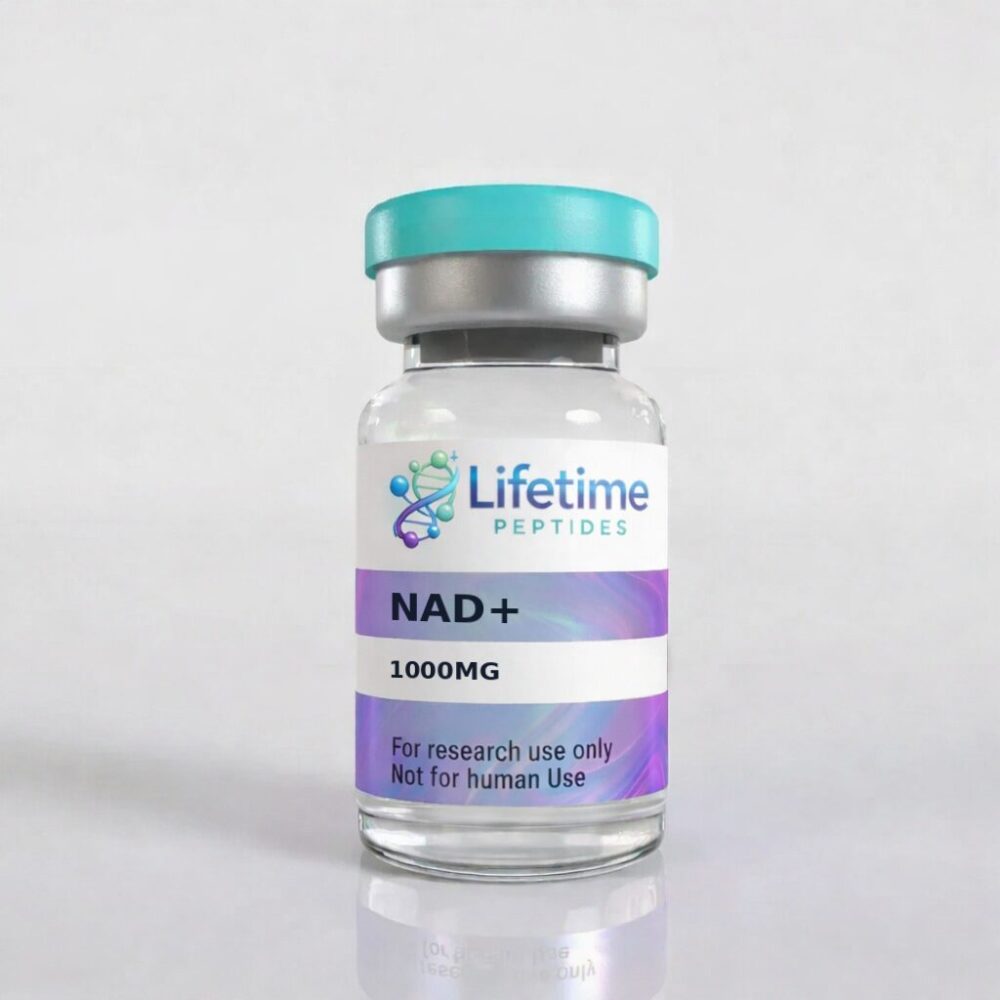
Nicotinamide Adenine Dinucleotide (NAD+) is a critical coenzyme found in every living cell, playing a central role in energy metabolism, DNA repair, and cellular signalling. This 1000mg preparation provides a high-dose format for laboratory research protocols requiring larger quantities.
NAD+ 1000mg Structure
| Compound Name | Nicotinamide Adenine Dinucleotide |
| Synonyms | NAD, NAD+, Coenzyme I |
| Molecular Formula | C₂₁H₂₇N₇O₁₄P₂ |
| Molecular Weight | 663.43 g/mol |
| CAS Number | 53-84-9 |
NAD+ Research
1. NAD+ and Cellular Energy Metabolism
NAD+ is an essential electron carrier in glycolysis and the citric acid cycle, directly involved in ATP synthesis via oxidative phosphorylation. Research models demonstrate that maintaining NAD+ levels supports mitochondrial efficiency.
2. NAD+ and Sirtuin Activation
Studies show NAD+ is a required substrate for sirtuins (SIRT1–7), a family of deacetylase enzymes linked to longevity pathways, inflammation regulation, and metabolic homeostasis.
3. NAD+ and DNA Repair
PARP enzymes, which are key mediators of DNA repair, consume NAD+ as a substrate. Research indicates that adequate NAD+ levels are essential for maintaining genomic stability.
Future NAD+ Research
Investigations continue into NAD+ decline during aging and its potential restoration in neurodegenerative diseases, cardiovascular research models, and metabolic syndrome studies.
NAD+ Resources
- Verdin E. – NAD+ in aging, metabolism, and neurodegeneration. Science, 2015.
- Rajman L, et al. – Therapeutic potential of NAD-boosting molecules. Cell Metabolism, 2018.
- Yoshino J, et al. – NAD+ intermediates: The biology and therapeutic potential. Cell Metabolism, 2018.


