







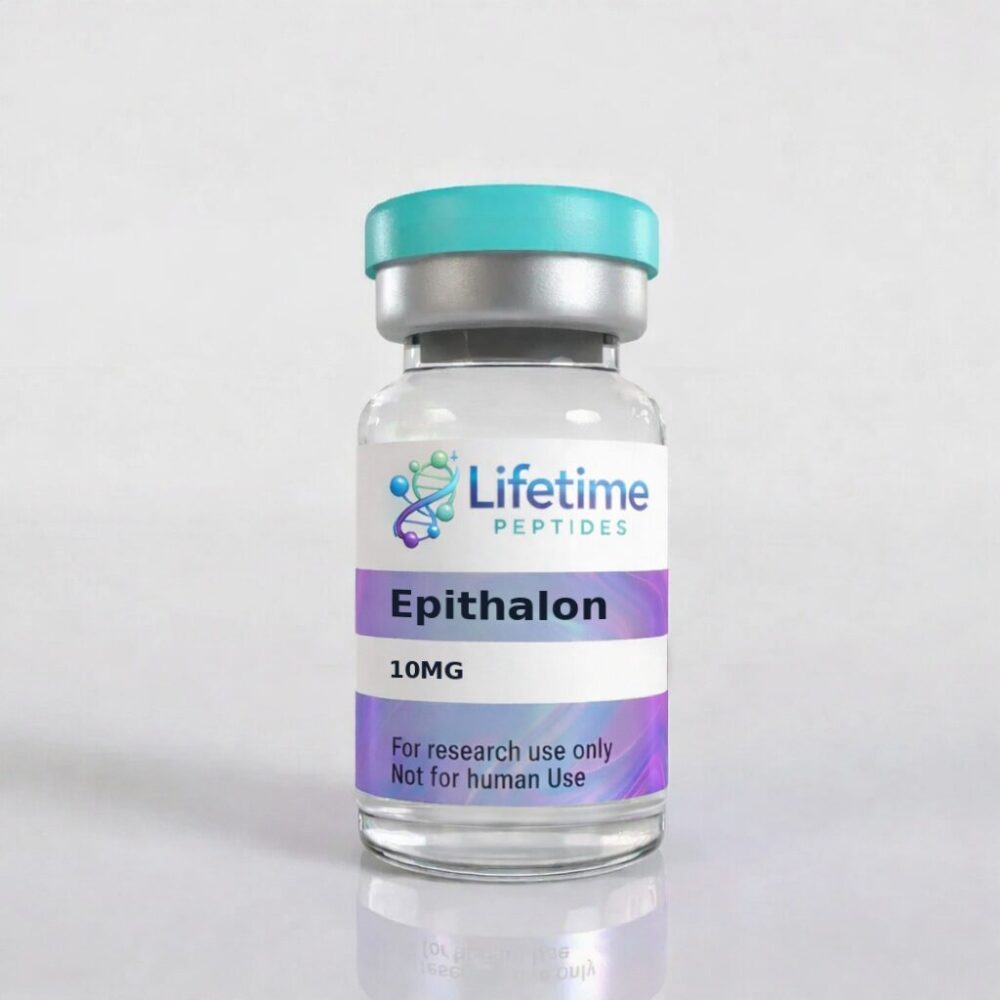
What is Epithalon?
Epithalon (Epitalon, Epithalone) is a synthetic tetrapeptide (Ala-Glu-Asp-Gly) derived from Epithalamin, a natural polypeptide extract of the pineal gland. It is studied primarily for its reported ability to stimulate telomerase activity and elongate telomeres in somatic cells, placing it at the forefront of cellular aging research.
Epithalon Structure
| Peptide Name | Epithalon |
| Synonyms | Epitalon, Epithalone, Ala-Glu-Asp-Gly |
| Sequence | Ala-Glu-Asp-Gly |
| Molecular Formula | C₁₄H₂₂N₄O₉ |
| Molecular Weight | 390.35 g/mol |
Epithalon Research
1. Epithalon and Telomerase Activation
In vitro studies have demonstrated that Epithalon can activate telomerase in human somatic cells, leading to telomere elongation. This has positioned it as a primary research tool in cellular aging and replicative senescence models.
2. Epithalon and Antioxidant Activity
Animal studies have shown that Epithalon reduces lipid peroxidation and increases superoxide dismutase (SOD) activity, suggesting antioxidant properties that may contribute to its cellular protective effects.
3. Epithalon and Melatonin Regulation
Research in aged animal models suggests Epithalon normalises melatonin secretion from the pineal gland, which declines with age, providing a connection between its aging and circadian research applications.
Future Epithalon Research
Research is ongoing into Epithalon’s effects on oncological models, immune senescence, neuroendocrine regulation, and its interaction with the HPA axis during aging.
Epithalon Resources
- Khavinson VKh, et al. – Epithalon peptide induces telomerase activity and telomere elongation in human somatic cells. Bull Exp Biol Med, 2003.
- Anisimov VN, et al. – Effect of Epitalon on biomarkers of aging and life span extension in mice. Biogerontology, 2003.


Reviews
There are no reviews yet.