





What is GHK-Cu?
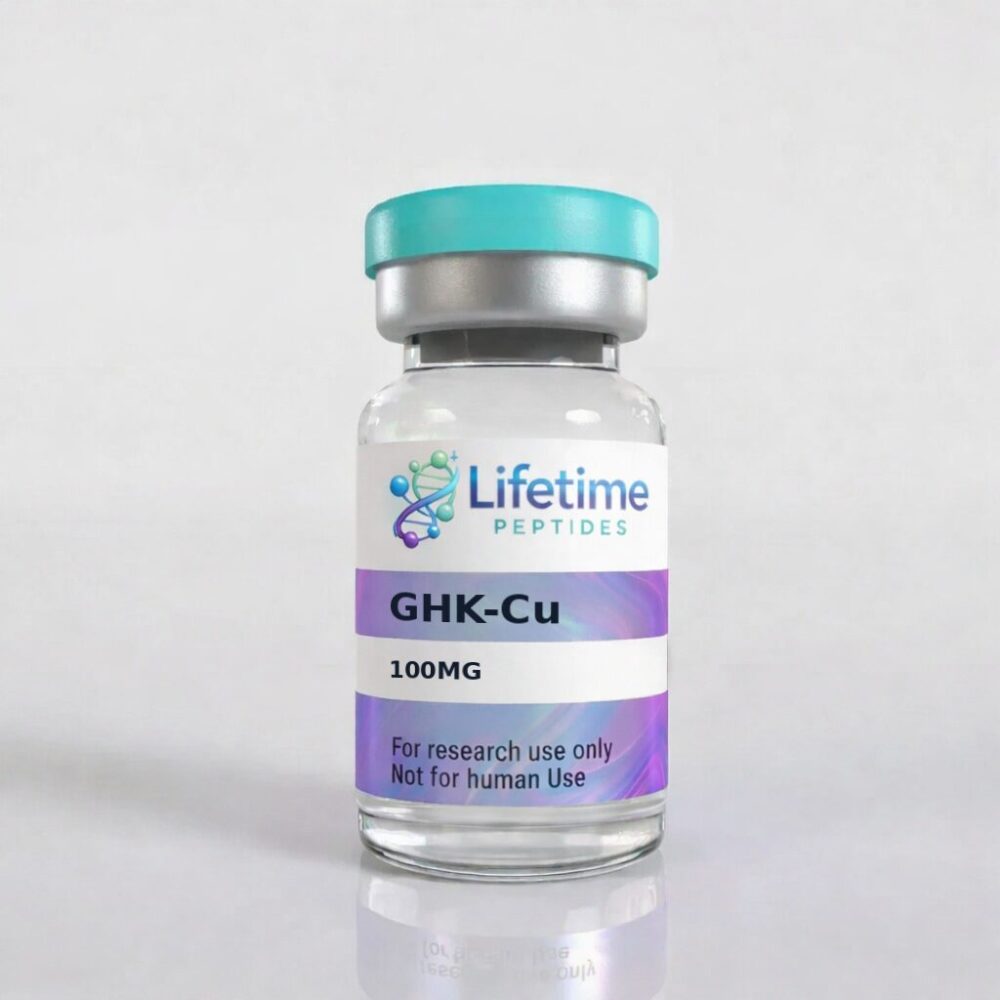
GHK-Cu (Glycyl-L-Histidyl-L-Lysine copper complex) is a naturally occurring copper-binding tripeptide found in human plasma, saliva, and urine. It has been extensively researched for its roles in tissue remodelling, wound healing, anti-inflammatory signalling, and gene expression regulation. This 100mg high-dose format is suited for bulk research protocols.
GHK-Cu Structure
| Peptide Name | GHK-Cu |
| Synonyms | Copper tripeptide-1, Copper GHK |
| Sequence | Gly-His-Lys (complexed with Cu²⁺) |
| Molecular Formula | C₁₄H₂₄CuN₆O₄ |
| Molecular Weight | 403.93 g/mol |
GHK-Cu Research
1. GHK-Cu and Wound Healing
Multiple studies have demonstrated that GHK-Cu accelerates wound closure, promotes collagen synthesis, and enhances angiogenesis in tissue repair models.
2. GHK-Cu and Gene Regulation
Microarray studies have revealed that GHK-Cu modulates the expression of over 4,000 genes, including upregulation of anti-inflammatory, antioxidant, and repair-associated pathways.
3. GHK-Cu and Antioxidant Defense
GHK-Cu has been shown to upregulate superoxide dismutase and catalase expression, contributing to cellular antioxidant defense in oxidative stress models.
Future GHK-Cu Research
Emerging research is investigating GHK-Cu in neurodegeneration models, pulmonary fibrosis, and oncology, given its broad gene-regulatory profile.
GHK-Cu Resources
- Pickart L, Margolina A. – Regenerative and Protective Actions of the GHK-Cu Peptide in the Light of the New Gene Data. Int J Mol Sci, 2018.
- Pickart L. – The human tri-peptide GHK and tissue remodeling. J Biomater Sci Polym Ed, 2008.


Reviews
There are no reviews yet.