






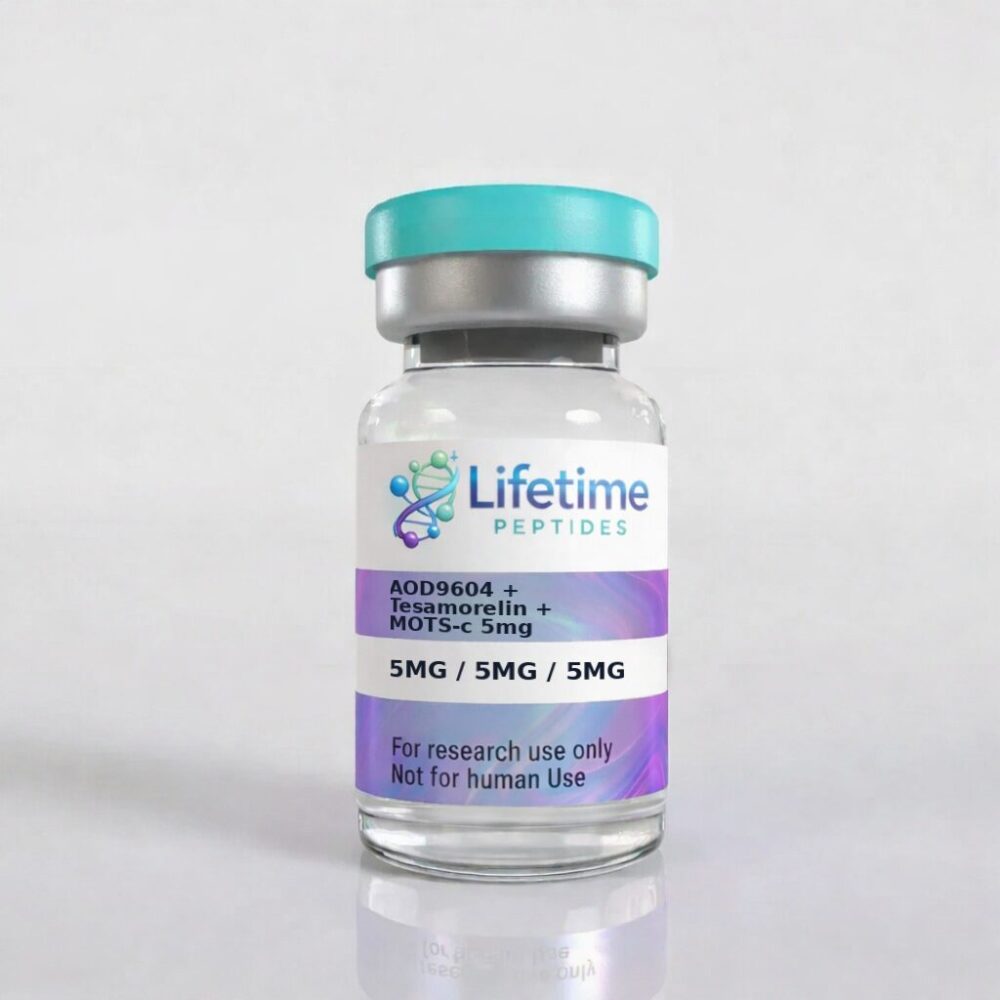
What is the AOD9604 + Tesamorelin + MOTS-c Blend?
This research blend combines three peptides with complementary mechanisms targeting fat metabolism, growth hormone release, and mitochondrial energy regulation. It is intended for advanced laboratory research into metabolic pathways and body composition models.
Blend Components
| AOD9604 (5mg) | A stabilised fragment (177–191) of human growth hormone, studied for its role in lipolysis and fat metabolism without affecting IGF-1 or blood glucose. |
| Tesamorelin (5mg) | A GHRH analog that stimulates pituitary GH release; researched for visceral fat reduction and metabolic effects. |
| MOTS-c (5mg) | A mitochondria-derived peptide that activates AMPK and improves insulin sensitivity and metabolic homeostasis. |
Blend Research Applications
1. Fat Metabolism and Lipolysis
AOD9604 activates beta-3 adrenergic receptors and may stimulate lipolysis and inhibit lipogenesis in adipose tissue models, providing a targeted fat-metabolism research tool.
2. Growth Hormone Axis Stimulation
Tesamorelin’s GHRH-analog activity promotes endogenous GH secretion, making this blend useful for studying the GH/IGF-1 axis alongside metabolic regulation.
3. Mitochondrial Metabolic Regulation
MOTS-c contributes AMPK-pathway activation, complementing the GH-axis effects of the other two peptides in combined metabolic research models.
Future Research
This combination blend is particularly relevant for research into visceral adiposity, metabolic syndrome, and growth hormone deficiency models in laboratory settings.
Resources
- Heffernan MA, et al. – The effects of human GH fragment (177-191) on adipose tissue.
- Falutz J, et al. – Tesamorelin and visceral adipose tissue reduction. NEJM, 2010.
- Lee C, et al. – MOTS-c promotes metabolic homeostasis. Cell Metabolism, 2015.


Reviews
There are no reviews yet.