








Proper peptide storage is one of the most important factors in maintaining peptide stability, purity, and research integrity after reconstitution.
Researchers across Canada frequently ask:
- How long do peptides last after mixing?
- Should peptides be refrigerated?
- Can mixed peptides stay at room temperature?
- What happens if peptides are stored incorrectly?
This complete 2026 peptide storage guide explains how to store peptides after mixing, including refrigeration recommendations, peptide stability timelines, bacteriostatic water storage practices, and common mistakes researchers should avoid.
How Should Peptides Be Stored After Mixing?
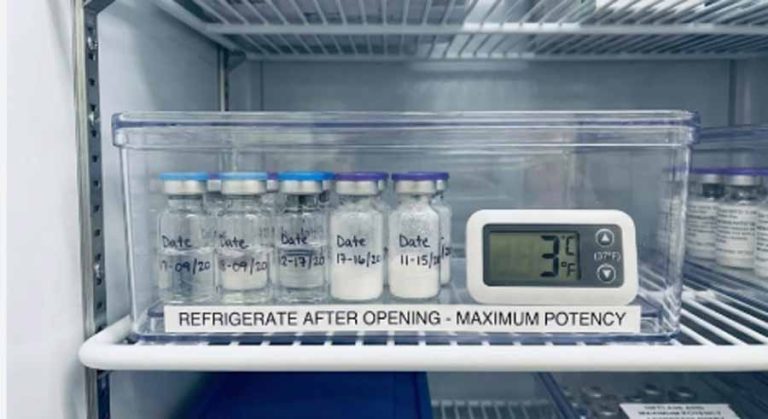
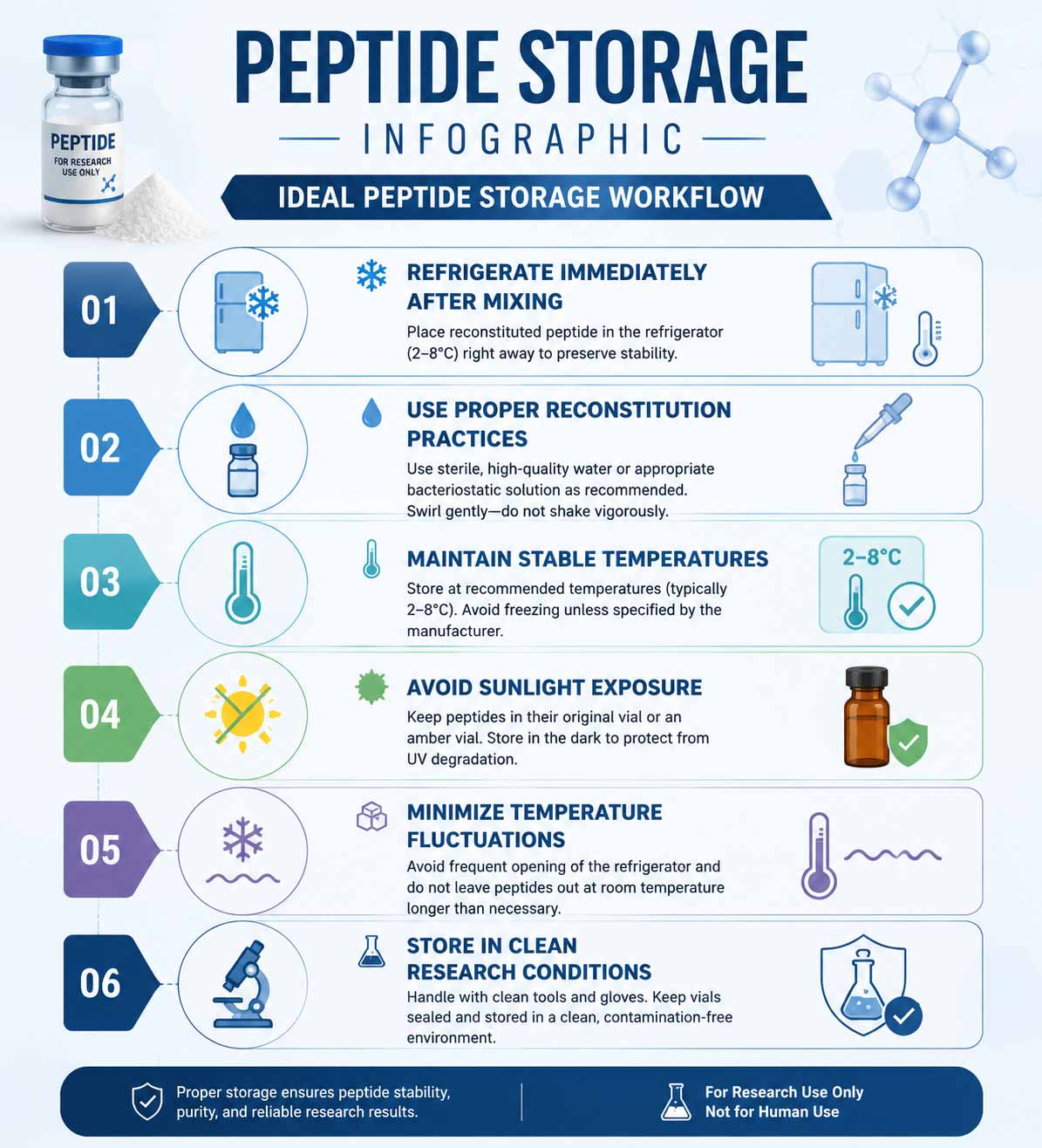
Mostshould be refrigerated after mixing at temperatures between 2°C and 8°C (36°F to 46°F). Proper refrigeration helps preserve peptide stability and reduce degradation over time.
Researchers commonly use bacteriostatic water during peptide reconstitution because it may help improve stability during refrigerated storage.
Why Proper Peptide Storage Matters
Peptides are delicate research compounds that can degrade when exposed to:
- Heat
- Light
- Moisture
- Repeated temperature changes
- Improper handling
Improper peptide storage may reduce:
- Peptide stability
- Research consistency
- Compound integrity
- Long-term usability
This is why peptide refrigeration and proper storage protocols are widely recommended in research environments.
Should Peptides Be Refrigerated After Mixing?
Yes. Most reconstituted peptides are commonly refrigerated after mixing.
The recommended storage temperature for mixed peptides is typically:
Recommended Temperature Range
2°C to 8°C (36°F to 46°F)
Refrigeration helps slow peptide degradation and maintain compound stability for a longer period.
Why Refrigeration Helps
- Reduces molecular breakdown
- Helps preserve peptide integrity
- Supports longer storage duration
- Minimizes instability caused by heat exposure
How Long Do Peptides Last After Mixing?
Peptide shelf life after reconstitution varies depending on:
- The peptide itself
- Storage temperature
- Type of mixing solution used
- Exposure to light and contamination
General Peptide Stability Timeline
| Storage Condition | Estimated Stability | Risk Level |
|---|---|---|
| Refrigerated (2°C–8°C) | Several weeks | Low |
| Room Temperature | Short-term only | Medium-High |
| Heat Exposure | Rapid degradation possible | High |
| Frozen Storage | Long-term potential | Low if handled properly |
Important: Repeated warming and cooling cycles may negatively impact peptide stability.
Why Researchers Use Bacteriostatic Water
Bacteriostatic water is commonly used during peptide reconstitution because it contains a preservative designed to reduce bacterial growth during storage.
Benefits of Bacteriostatic Water
- Improved storage convenience
- Potentially longer usability after mixing
- Reduced contamination risk
- Widely used in peptide research environments
Distilled Water vs Bacteriostatic Water
| Feature | Bacteriostatic Water | Distilled Water |
|---|---|---|
| Contains preservative | Yes | No |
| Common in peptide storage | Yes | Less common |
| Storage convenience | Higher | Lower |
| Research usage popularity | Very high | Moderate |
Common Peptide Storage Mistakes
1. Leaving Peptides at Room Temperature Too Long
Extended heat exposure may accelerate peptide degradation.
2. Exposure to Direct Sunlight
UV exposure may reduce peptide stability over time.
3. Frequent Temperature Changes
Repeated refrigeration cycles may negatively affect compound integrity.
4. Improper Handling
Contamination during handling may impact peptide quality.
5. Storing Mixed Peptides in Warm Areas
Warm environments may reduce peptide lifespan significantly.
Peptide Storage Best Practices Table
| Best Practice | Recommended? | Why It Matters |
|---|---|---|
| Refrigerate after mixing | Yes | Supports stability |
| Avoid direct sunlight | Yes | Reduces degradation |
| Use bacteriostatic water | Commonly recommended | Storage convenience |
| Repeated warming/cooling | No | May reduce integrity |
| Store in hot environments | No | Accelerates instability |
Research Disclaimer
All peptides and research compounds referenced in this article are intended strictly for laboratory and research purposes only. They are not approved for human consumption or medical use.
Final Thoughts
Proper peptide storage is essential for maintaining research integrity, compound stability, and long-term usability after mixing.
By following refrigeration best practices, minimizing temperature fluctuations, and using proper storage procedures, researchers can help preserve peptide quality more effectively.
As peptide research continues growing rapidly in Canada throughout 2026, educational content around peptide stability and storage remains one of the highest-performing SEO topics in both traditional search engines and AI-powered search platforms.


